Logistics News
Romania as an Alternative to the Black Sea: Opportunities and Limits for Ukrainian Exports
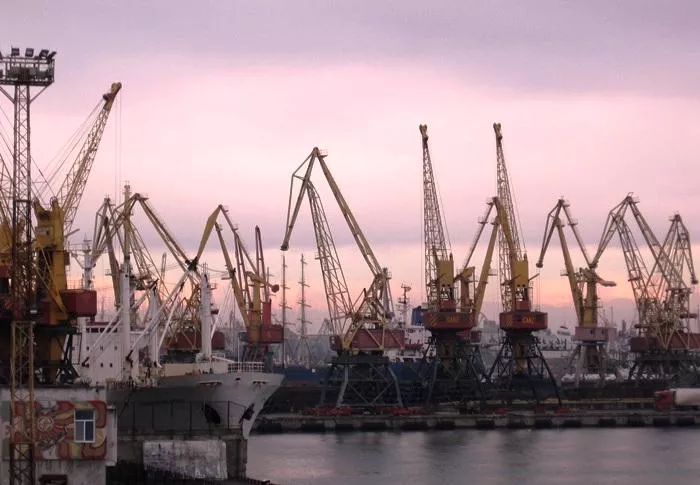
Increasing pressure on Ukraine’s port infrastructure is forcing exporters to look for alternative routes. Romania is becoming one of the most important options through the Danube, land border crossings and the Port of Constanța.
According to the Centre for Economic Strategy, Ukraine’s agricultural export forecast for the new marketing year has fallen by more than half - from 64.4 to 29.6 million tonnes. Restrictions on maritime logistics also affect metallurgy and other industries that depend on moving large cargo volumes efficiently.
Constanța is one of the largest Black Sea ports and a natural alternative gateway for Ukrainian cargo. Shipments can reach Romania by road, rail and inland waterways.
However, the Romanian route cannot fully replace Ukraine’s Greater Odesa ports.
Alternative corridors have limited capacity, while a significant part of Constanța’s infrastructure is already used by Romanian and other European exporters. Low water levels on the Danube can also reduce vessel loading capacity.
Additional transshipment between trucks, railway wagons, river vessels and seagoing ships increases both transit time and transportation costs. As a result, routing cargo through Romania can be considerably more expensive than direct shipment through Ukrainian Black Sea ports.
For businesses, the practical solution is logistics diversification. Cargo flows can be distributed between Romania, Danube ports, EU road and rail crossings, and other European seaports.
LOADSTAR supports international road and multimodal transportation, taking into account border congestion, equipment availability, terminals, port costs and alternative routes.
In unstable conditions, the strongest logistics strategy is not to depend on a single replacement for the Black Sea, but to maintain several workable transport scenarios.
According to the Centre for Economic Strategy, Ukraine’s agricultural export forecast for the new marketing year has fallen by more than half - from 64.4 to 29.6 million tonnes. Restrictions on maritime logistics also affect metallurgy and other industries that depend on moving large cargo volumes efficiently.
Constanța is one of the largest Black Sea ports and a natural alternative gateway for Ukrainian cargo. Shipments can reach Romania by road, rail and inland waterways.
However, the Romanian route cannot fully replace Ukraine’s Greater Odesa ports.
Alternative corridors have limited capacity, while a significant part of Constanța’s infrastructure is already used by Romanian and other European exporters. Low water levels on the Danube can also reduce vessel loading capacity.
Additional transshipment between trucks, railway wagons, river vessels and seagoing ships increases both transit time and transportation costs. As a result, routing cargo through Romania can be considerably more expensive than direct shipment through Ukrainian Black Sea ports.
For businesses, the practical solution is logistics diversification. Cargo flows can be distributed between Romania, Danube ports, EU road and rail crossings, and other European seaports.
LOADSTAR supports international road and multimodal transportation, taking into account border congestion, equipment availability, terminals, port costs and alternative routes.
In unstable conditions, the strongest logistics strategy is not to depend on a single replacement for the Black Sea, but to maintain several workable transport scenarios.