Logistics News
₴38 Billion Budget Gap: What Ukrzaliznytsia’s 2026 Financial Crisis Means for Logistics
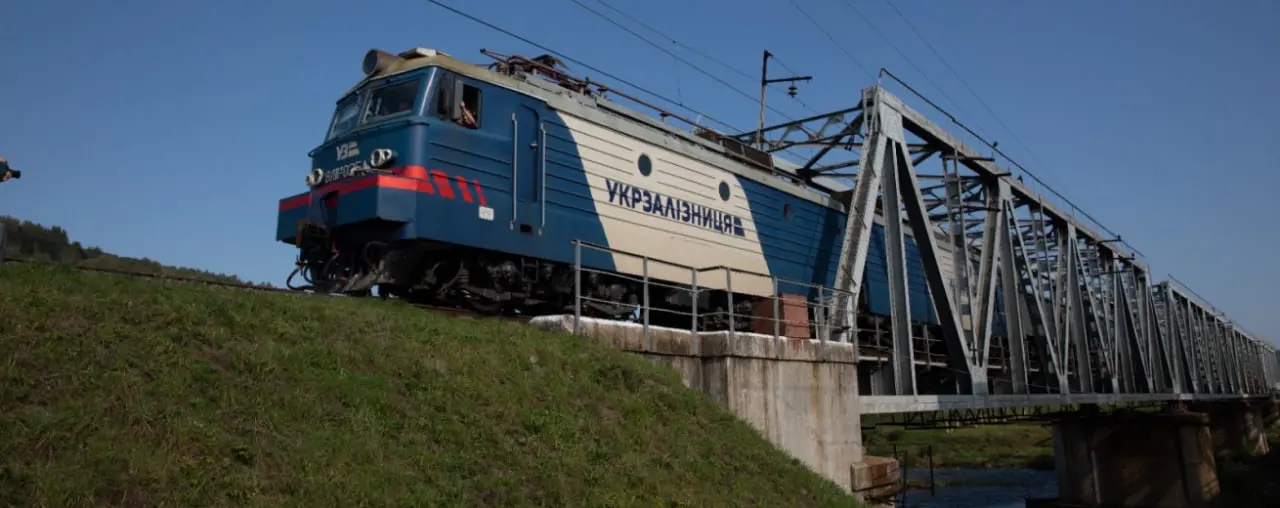
Ukraine’s rail sector is entering 2026 under serious financial pressure. According to official estimates, Ukrzaliznytsia is facing a ₴38 billion budget shortfall, even if its full cost-optimization program is successfully implemented. The figure has been confirmed by the Ministry for Communities and Territorial Development, which describes the gap as critical not only for rail transport, but for the national economy as a whole.
Ukrzaliznytsia estimates that internal optimization measures could save around ₴10.2 billion, but this would still leave a substantial deficit. The core issue lies on the revenue side: freight volumes - the backbone of railway financing - have fallen sharply.
Compared to pre-war levels, freight traffic has dropped by around 50%, and when measured against 2014 figures, volumes are down nearly fourfold. For a system-critical infrastructure operator, such a decline directly undermines financial sustainability and limits any capacity for development.
The impact of the war further compounds the problem. Ongoing missile and drone attacks continue to damage tracks, stations, power infrastructure, and rolling stock. Parts of the network are operating under emergency conditions, while funding for additional security and rapid restoration remains extremely limited. Under these constraints, capital investment has effectively been replaced by basic survival spending.
Another long-term challenge is historical debt accumulation. Years of borrowed financing now translate into heavy debt-servicing obligations, narrowing the company’s financial flexibility. In 2026, this burden is expected to intensify rather than ease.
For shippers and industrial clients, the most tangible consequence will be higher rail tariffs. Ukrzaliznytsia openly acknowledges that, under current conditions, avoiding further tariff increases is highly unlikely. This will directly raise logistics costs for manufacturers, agricultural exporters, traders, and energy companies already operating under pressure.
For the wider logistics market, the situation reinforces the need for diversification - across transport modes, routes, and planning strategies. Businesses increasingly combine rail with road and maritime solutions, explore alternative export corridors, and rely on flexible supply-chain design to stay competitive.
Sources:
– official statements by Ukrzaliznytsia representatives
– Ministry for Communities and Territorial Development of Ukraine
Ukrzaliznytsia estimates that internal optimization measures could save around ₴10.2 billion, but this would still leave a substantial deficit. The core issue lies on the revenue side: freight volumes - the backbone of railway financing - have fallen sharply.
Compared to pre-war levels, freight traffic has dropped by around 50%, and when measured against 2014 figures, volumes are down nearly fourfold. For a system-critical infrastructure operator, such a decline directly undermines financial sustainability and limits any capacity for development.
The impact of the war further compounds the problem. Ongoing missile and drone attacks continue to damage tracks, stations, power infrastructure, and rolling stock. Parts of the network are operating under emergency conditions, while funding for additional security and rapid restoration remains extremely limited. Under these constraints, capital investment has effectively been replaced by basic survival spending.
Another long-term challenge is historical debt accumulation. Years of borrowed financing now translate into heavy debt-servicing obligations, narrowing the company’s financial flexibility. In 2026, this burden is expected to intensify rather than ease.
For shippers and industrial clients, the most tangible consequence will be higher rail tariffs. Ukrzaliznytsia openly acknowledges that, under current conditions, avoiding further tariff increases is highly unlikely. This will directly raise logistics costs for manufacturers, agricultural exporters, traders, and energy companies already operating under pressure.
For the wider logistics market, the situation reinforces the need for diversification - across transport modes, routes, and planning strategies. Businesses increasingly combine rail with road and maritime solutions, explore alternative export corridors, and rely on flexible supply-chain design to stay competitive.
Sources:
– official statements by Ukrzaliznytsia representatives
– Ministry for Communities and Territorial Development of Ukraine